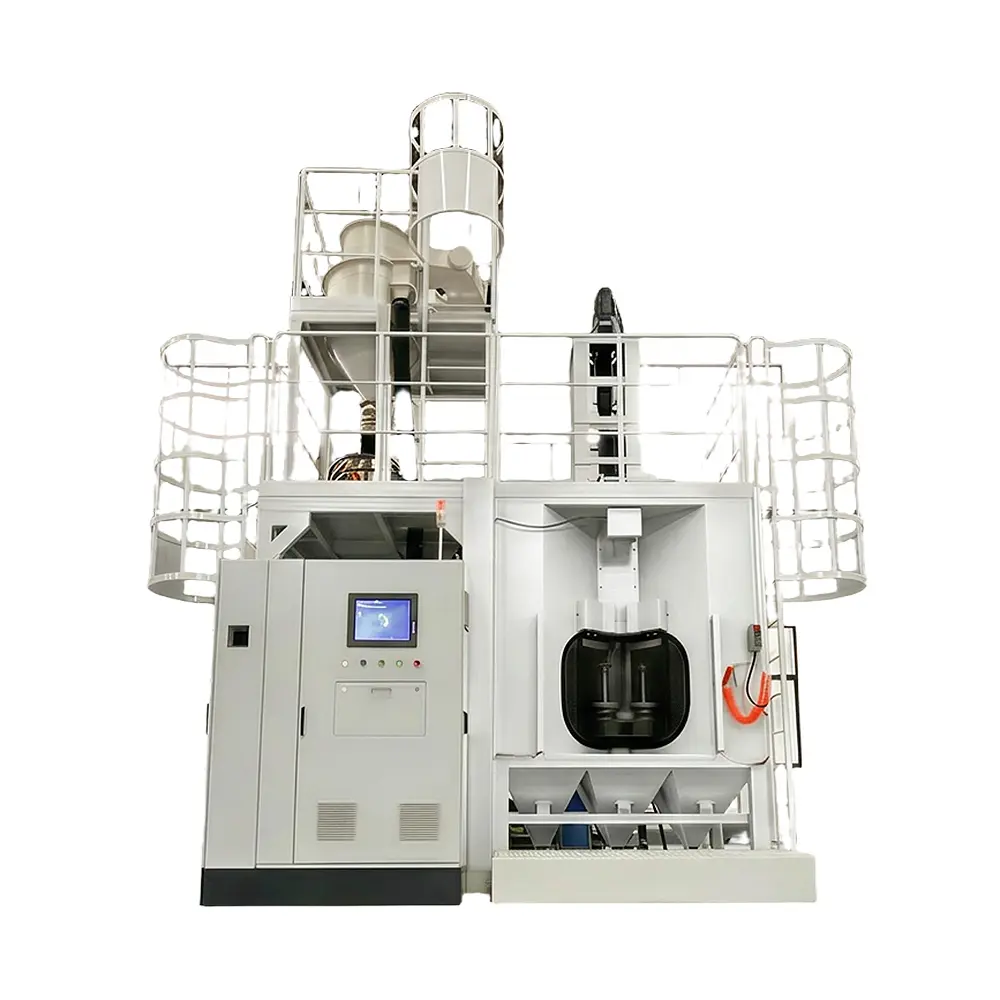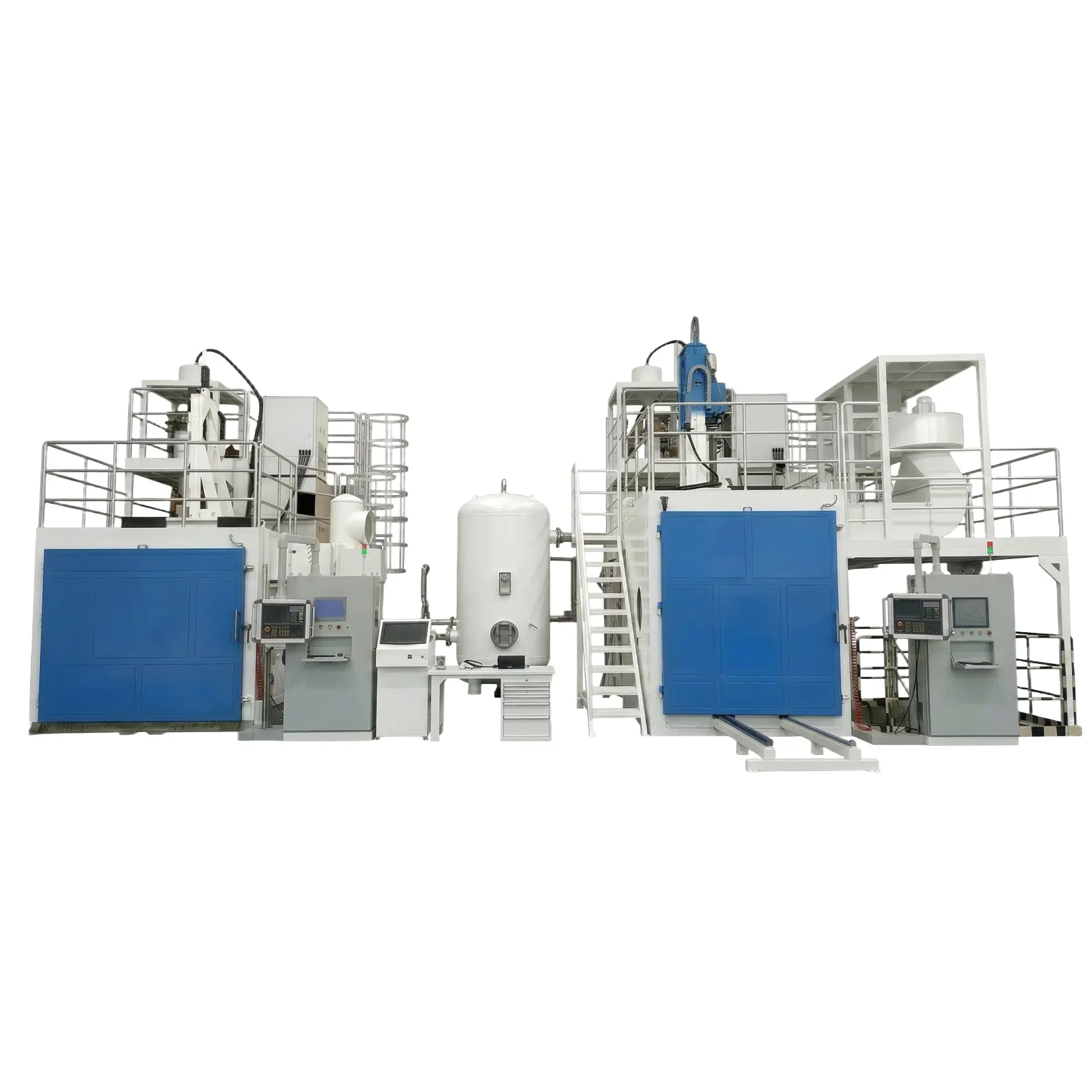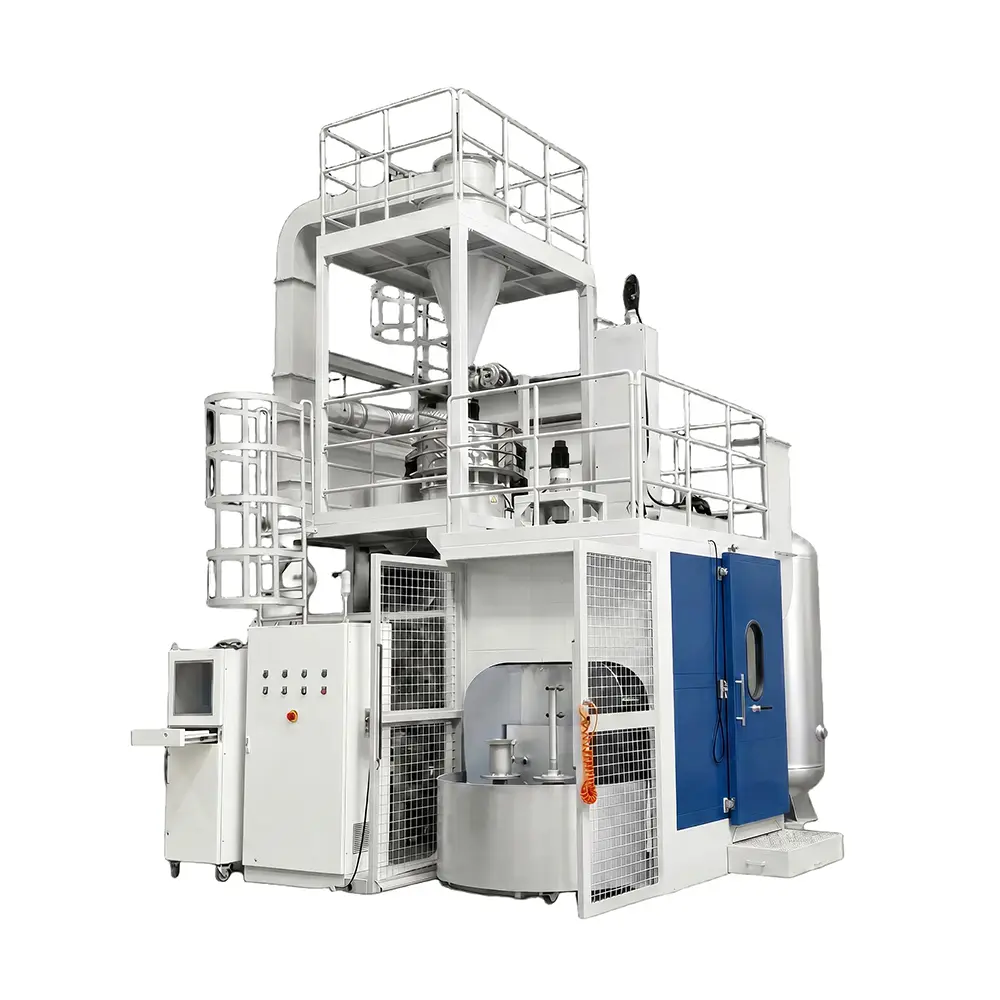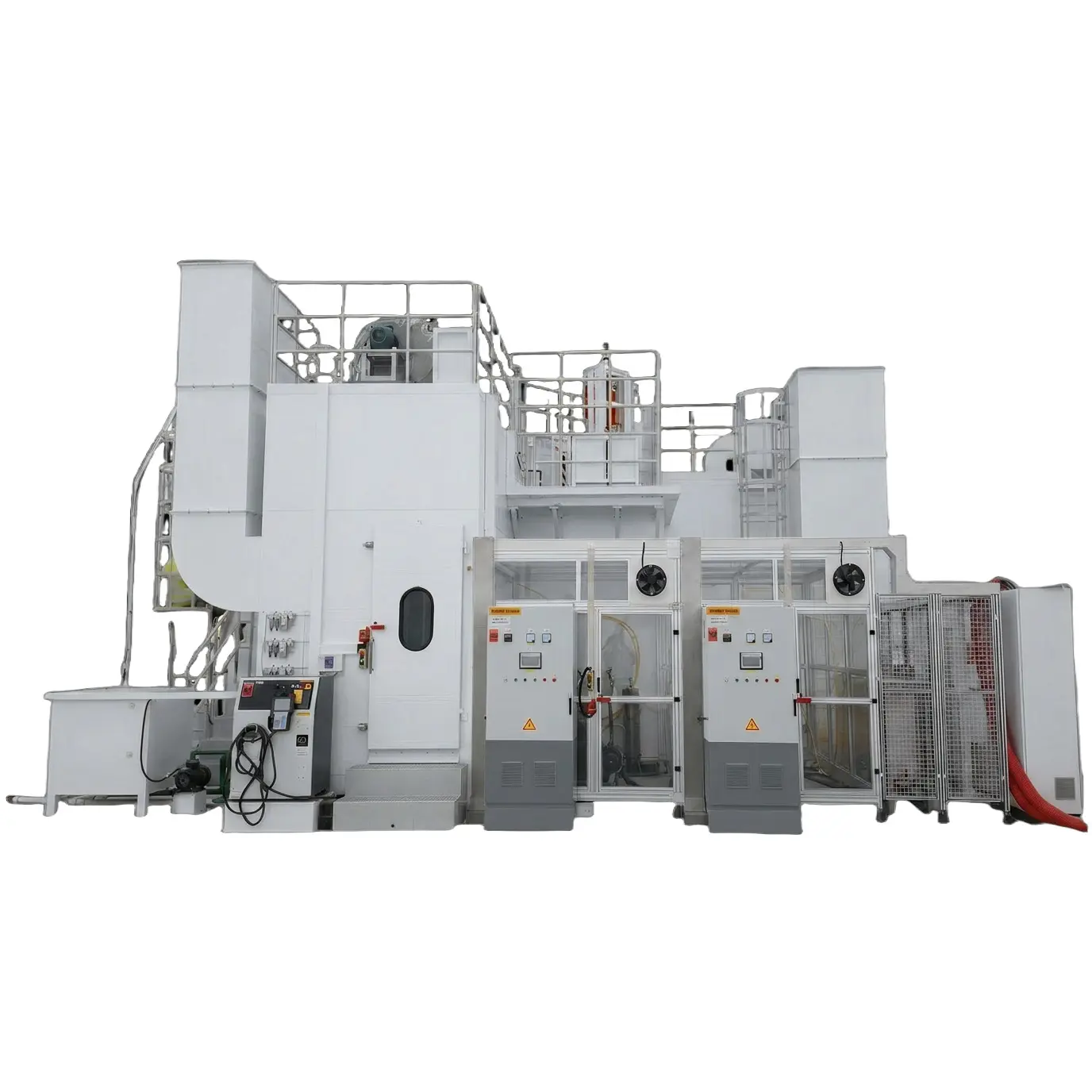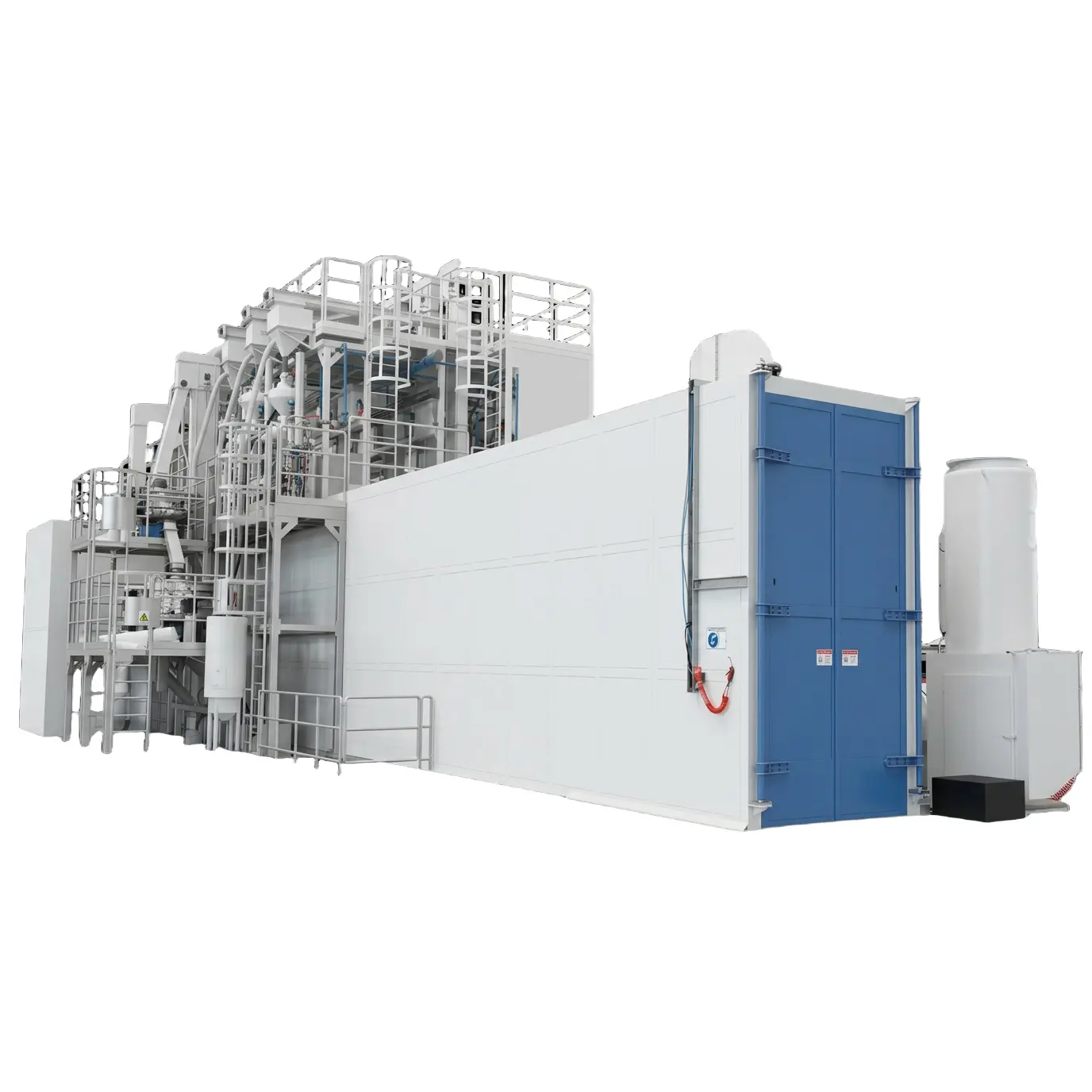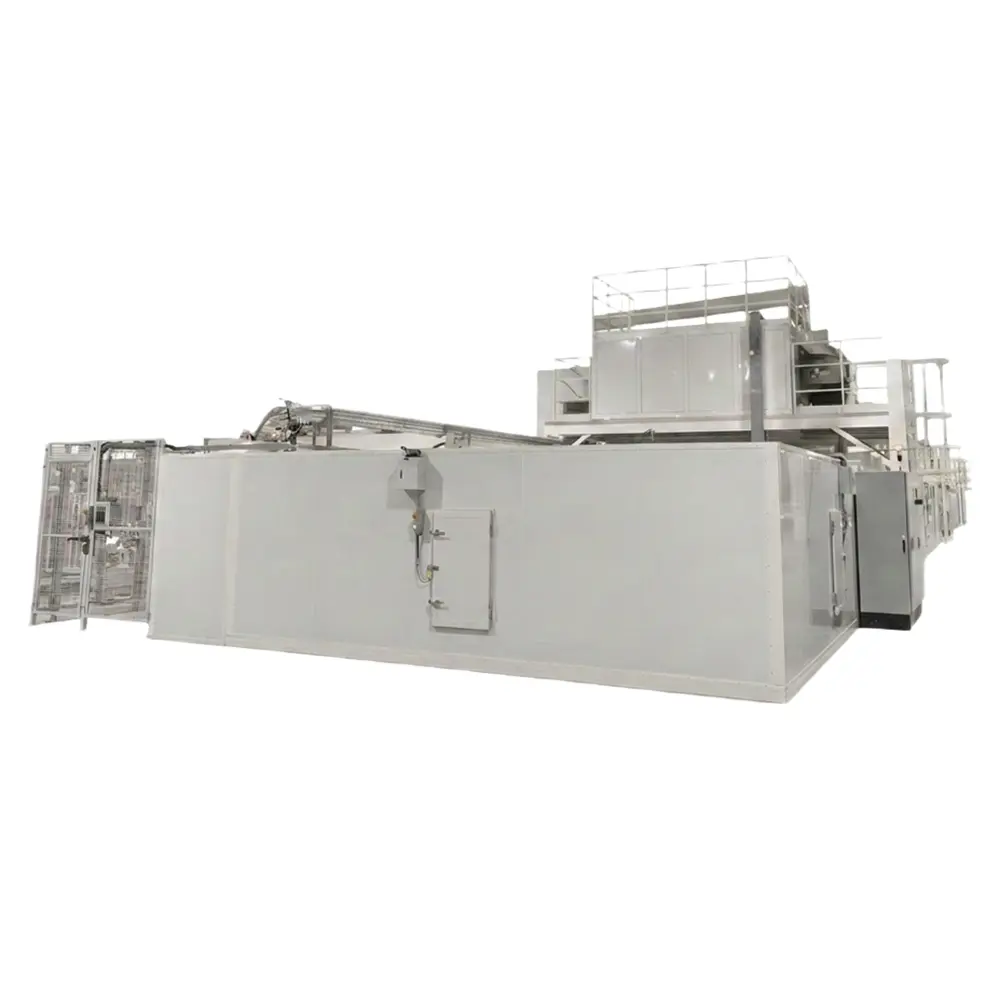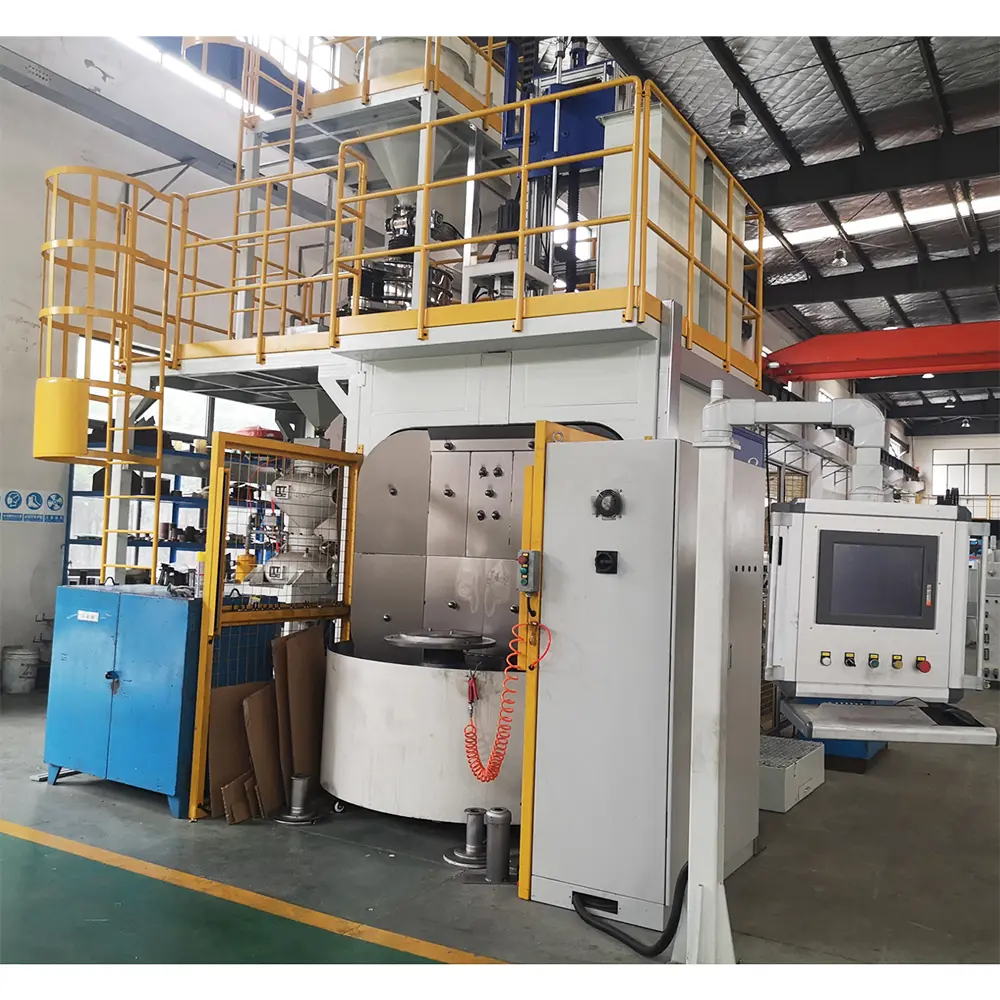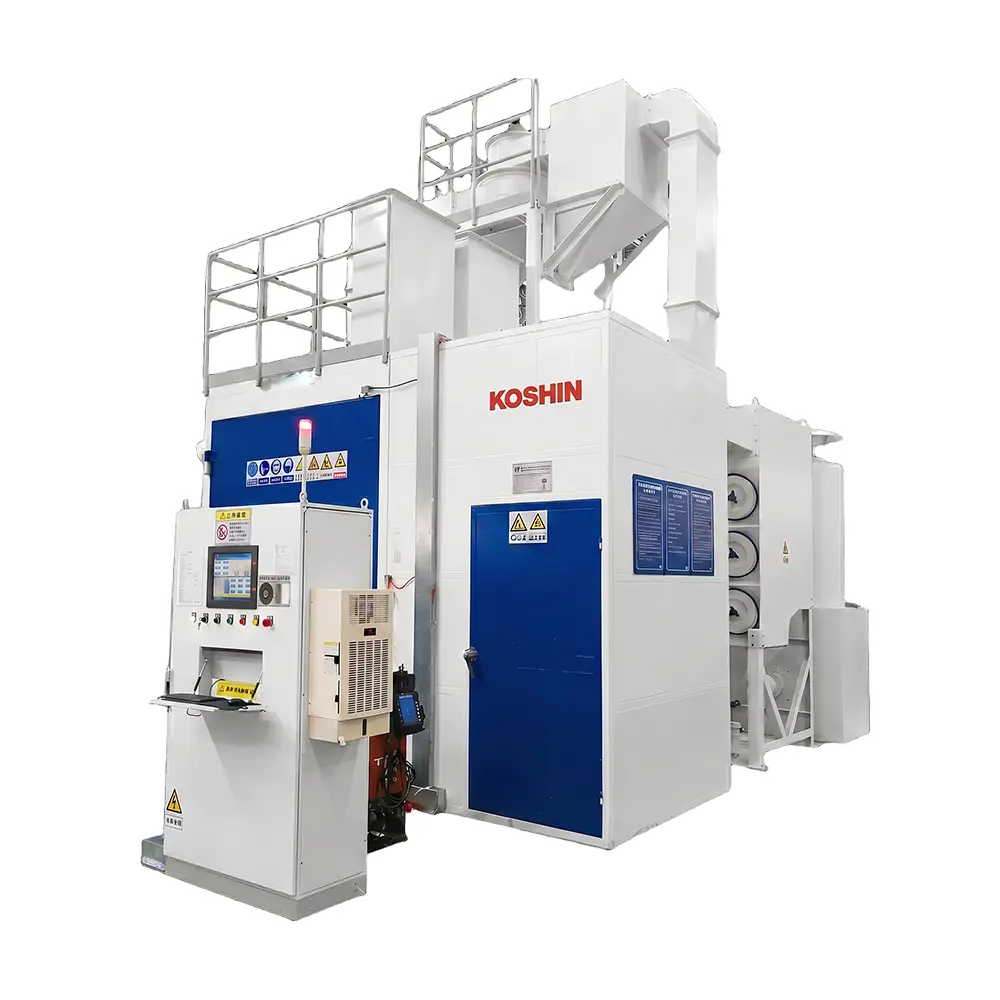
Centrifugal wheel blasting transforms kinetic energy transfer from intermittent pneumatics into continuous mechanical acceleration, ensuring unprecedented energy efficiency and uniform compressive profile distribution.
Aerospace Turbine & Structural Cold Working
Controlled centrifugal blasting introduces calibrated deep-layer compressive residual stress profiles across titanium blisks, turbine discs, and forged wing spars. Eliminates micro-fissure propagation under cyclic thermal shock and low-cycle fatigue (LCF), ensuring compliance with strict AMS 2430 and AMS 2432 standards.
Automotive Powertrain & EV Transmission
Continuous-flow pass-through centrifugal systems process planetary gears, hypoid pinions, and ring assemblies. By transforming tensile stresses from gear hobbing and carburizing into continuous compressive horizons, transmission life expands by over 300% under high-torque electric powertrain stresses.
Heavy Infrastructure, Marine & Energy
Large-scale continuous roller conveyor blast machines handle structural H-beams, naval steel plates, and wind turbine tower flanges. Achieves ISO 8501-1 Sa 2.5 to Sa 3.0 white metal cleanliness, optimizing thermodynamic bonding matrices for thermal spray and marine epoxy systems.
Commercial Ecosystem
Global Industrial Footprint & Cross-Border Supply Integration
The transition toward decarbonized heavy engineering demands equipment that delivers lower specific kilowatt-hour consumption per treated square meter. Centrifugal wheel blasting consumes up to 85% less energy than pneumatic compressed-air blasting for equivalent mass throughput.
Tier-1 Strategic ODM Partnership
Direct OEM/ODM alignment with major international production consortiums. We provide proprietary CAD-to-FAT mechanical design, tailored chamber geometries, and direct integration with factory MES architectures, delivering turnkey reliability for multinational capital projects.
Nadcap & Aerospace Standard Compliance
Digital parameter tracking aligns with AMS 2430, AMS 2432, SAE J442, and SAE J443. Closed-loop wheel velocity regulation and media classification systems guarantee repeatable Almen intensity verification across rigorous multi-year audit cycles.
Dual-Node Engineering & Fabrication Matrix
Global R&D, process simulation, and controls architecture orchestrated from our engineering center in Singapore, backed by comprehensive integrated heavy fabrication, robotic welding, and full-load run-off testing at our high-capacity Chinese manufacturing base.
Original Equipment Portfolio
Precision Peening, Forming & Blasting Equipment
From robotic peening cells for turbine discs to dieless peen forming of wing skins, each platform is configured to component geometry, media classification, and governing industrial standards.
Shot Peening 01
Robotic Shot Peening Machine for Aerospace & Automotive Parts
Multi-axis robot manipulation follows programmed nozzle paths across blades, discs, shafts, landing-gear and gear roots, while air pressure, media flow and part rotation are monitored in real time against tolerance limits — every cycle produces a batch record ready for quality review.
Fine ceramic or glass microspheres deliver low-intensity peening for thin-walled, small or finish-critical parts where surface roughness must stay minimal.
Peen Forming Machine for Aerospace Wing Skin Panels
Forms large aluminium wing skins and fuselage panels to aerodynamic contour without dies, using CNC-controlled shot streams and contour-verified forming recipes that also introduce beneficial compressive stress.
A Strategic Surface-Engineering Partner for Tier-1 Aerospace Suppliers
KOSHIN Precision Pte. Ltd. is a premium global brand specializing in advanced shot peening and surface treatment systems for aerospace and other safety-critical industries.
Our equipment is engineered for the most demanding requirements in process stability, repeatability and fatigue performance — applications where precise residual-stress control and long-term reliability decide whether a component reaches its certified service life.
Process trials before purchase with Almen saturation curve support
Documented Factory Acceptance Testing (FAT) & On-Site SAT run-off
Lifecycle maintenance & recalibration support in 50+ countries
Integrated Strengths
Why Engineering & Procurement Teams Choose KOSHIN
Four integrated capabilities reduce qualification risk, shorten project lead times, and keep your surface treatments audit-ready.
01. Engineering & R&D (Singapore)
Application engineers review drawings, materials and specification callouts, then develop and validate peening parameters on representative parts before machine design is frozen.
02. Digital Governance & Controls
Every critical variable is monitored and logged. Recipes are protected by user access levels, deviations trigger alarms and halt the cycle, and batch reports export directly for audits.
03. Integrated Manufacturing (China)
Fabrication, mechanical assembly, electrical wiring, and full run-off testing are performed under one roof, providing buyers competitive lead times without compromising build quality.
04. Lifecycle-Oriented Management
Installation, commissioning, operator training, consumable spare parts management, and retrofit upgrades keep equipment productive and compliant across decades of operational life.
Audit Readiness
Localized Support Framework & Regulatory Compliance
Deploying centrifugal blasting installations into regulated aerospace and tier-one automotive plants requires comprehensive local environmental, ergonomic, and safety validation.
Environmental & Emission Standards
Multi-stage down-flow cartridge filtration keeps industrial particulate emissions below <1.0 mg/Nm³, meeting stringent European ATEX, OSHA respirable crystalline silica (29 CFR 1910.1053), and EPA regional air quality mandates.
Acoustic Insulation & Worker Ergonomics
High-speed turbine blast housings feature heavy manganese steel armor backed by multi-layered acoustic dampening insulation, maintaining operating noise below 78 dB(A) for full ISO 14001 compliance and worker safety.
Traceable Lifecycle Calibration
Localized field technicians provide annual laser profiling of turbine blast wheels, sensor calibrations for load cells, and digital magnetic separator inspections to maintain Nadcap AC7117 audit integrity across Asia, Europe, and the Americas.
Engineering Matrix
Engineering Parameters: Pneumatic vs. Centrifugal Shot Blasting
A comparative engineering reference for capital equipment selection and process optimization.
Process Variable
Conventional Direct-Pressure Air Blasting
ODM Centrifugal Wheel Blasting Systems
Energy Transfer Efficiency
5% to 12% (Thermodynamic line losses, compressor heat)
Up to 75% - 85% (Direct mechanical kinetic conversion)
Abrasive Media Mass Flow Rate
8 to 25 kg/min per nozzle
120 to 900 kg/min per high-velocity turbine blast wheel
Surface Area Processing Rate
0.5 – 2.0 m²/min per operator/station
15.0 – 60.0 m²/min (Continuous roller conveyor)
Process Governance & Repeatability
Variable by manual motion; prone to nozzle wear drift
VFD closed-loop wheel control; locked digital recipes
Governing Aerospace Applications
Precision localized zones, complex deep internal bores
Engineering Surface Reliability Across 50+ Countries
Our manufacturing and technology centers cooperate with international aerospace OEMs and major MRO providers to uphold flight safety and structural integrity.
AIRBUSBOEINGGEMTUCOMACSAFRANSAESLHAECO
Future Innovations
Surface Metrology & Industrial Equipment Roadmap
How intelligent sensor integration, digital twins, and autonomous kinetic wheel modulation define the next era of ODM centrifugal surface treatment.
Phase I: Current
Closed-Loop Smart Wheel Control
Real-time variable frequency drives (VFD) paired with in-line inductive flow sensors adjust wheel RPM dynamically to maintain target throwing velocity within ±1% across all shifts.
Phase II: In Development
AI-Assisted Vision Metrology
Multi-spectral camera modules inspect 100% of the blasted surface profile in line, comparing surface coverage and roughness against AI-trained models to instantly flag coverage defects.
Phase III: Advanced Horizon
Digital Twin Predictive Maintenance
Acoustic and vibration sensors on blast wheel bearings build live wear maps for control cages and throw blades, scheduling maintenance before uneven media distribution occurs.
How We Work
From Drawing Callout to Signed-Off Peening Process
A shot peening and centrifugal blasting system is only as good as the process it repeats. This is the structured development path every KOSHIN machine follows.
Step 01: Specification Review
We review part metallurgy, treatment areas, masking needs, target Almen intensity ranges, and coverage requirements against your governing engineering specifications.
Step 02: Laboratory Trials
Almen saturation curves and coverage tests on our in-house lab equipment validate operational parameters with measured empirical evidence before freezing machine fabrication.
Step 03: Build, FAT & SAT
Machines are assembled to the validated recipe, proven through documented Factory Acceptance Testing (FAT), and re-verified on-site after commissioning via formal Site Acceptance Testing (SAT).
Step 04: Training & Lifecycle
Plant operators and quality personnel receive formal training on Almen verification and coverage metrics, backed by continuing field spare parts support and calibration services.
Buyer FAQ
Engineering Questions Before Specifying Blasting Equipment
Key technical insights directly from our application engineering and process validation teams.
What is the core difference between shot peening and centrifugal shot blasting?
Shot blasting and sand blasting remove scale, oxides, flash, and old coatings while producing an anchor profile for paint or thermal spray bonding. Controlled shot peening is a precision cold-working metallurgical process that bombards target surfaces with spherical media to induce uniform compressive residual stress, slowing micro-crack initiation and extending fatigue life. Peening acceptance relies on Almen strip saturation intensity and coverage percentage, rather than visual cleanliness.
Which international specifications can KOSHIN centrifugal and shot peening machines satisfy?
KOSHIN systems are built to meet your governing engineering specifications, including AMS 2430 and AMS 2432 for computer-monitored peening. Almen intensity verification follows SAE J442 and SAE J443, media classification conforms to aerospace standards, and digital audit logs are structured for Nadcap AC7117 audit traceability.
Can KOSHIN run process validation trials on customer parts prior to purchasing?
Yes. KOSHIN maintains in-house production cells for process development, generating Almen saturation curves, verifying coverage, and evaluating surface roughness on your sample parts. Once validated, parameters are written directly into machine control recipes, and contract processing is available for early production batches.
What technical data is required to generate an ODM custom machine proposal?
To recommend an appropriate machine frame and calculate required wheel horsepower or blast nozzle configurations, our engineers review: component dimensions, weight, and CAD geometry; required blast zones or masking callouts; target Almen intensity and coverage; abrasive media size and composition; required parts per hour; plant floor dimensions; and site environmental requirements.
How does KOSHIN support overseas installation, commissioning, and spare parts supply?
Coordinated from our Singapore engineering headquarters with field teams across major industrial hubs, KOSHIN supports clients across more than 50 countries. We provide on-site supervision, commissioning runs, operator training, consumable wear parts (throw blades, control cages, manganese liners), and remote diagnostic support via secure industrial network connections.
Equipment Catalog
Verified Industrial Surface Treatment Machinery
Review our specialized product range, engineered to deliver validated Almen coverage, process repeatability, and low lifecycle operating costs.